
Bathroom Mirror Lighting: Light Your Face, Not the Tiles (Part Two)
30 Sep 2026
Of all the places light matters in your home, that moment in front of the mirror (the quick check, the wink and the smile before you head out into the world) is one of our top priorities.
Yet most bathrooms, in brand-new builds and older homes alike, seem to be lit with the intention of making you look like you haven't slept in six months. Light from behind your head, or strong light directly overhead, throws dark shadows down your face, can make you look like you're going bald overnight, and hides the details you're looking for (like the stray hairs the razor missed).
The whole trick is getting light between your face and the mirror
The principle is simple, even if getting there takes planning. The light at the mirror has to go between your face and the mirror, never from directly overhead. That chases the shadows away and lets you see yourself in all your glory.
How you get there depends on the mirror itself. Is it flush mounted or a shaving cabinet? Does it run to the ceiling? Is there wall space either side, a window nearby, or light-sucking charcoal tiles opposite? Once we have those answers, we can work out exactly where the light needs to come from.
A beautiful feature wall is no use if you can't see your face
We were once called to site to check an installation, and our client mentioned that their daughter's mirror lighting wasn't working the way they'd imagined. Up the ladder we went, and the answer was simple (though not something you could expect everyone to know): the lights were aimed at the wrong thing. They'd been pointed at the feature tiles, and as a room it looked fantastic. Stand at the mirror, though, and nada. A few quick adjustments later, the light was on her face, the tiles still looked great, and a young woman's approval was won. The tiles were no longer the most important thing in the room. The person using it was.
Four of our favourite ways to light the mirror (there are ten)
Everyone has different ideas about what looks beautiful in a bathroom, and your mirror, walls and ceiling will rule some options in and others out. These four are a good place to start.
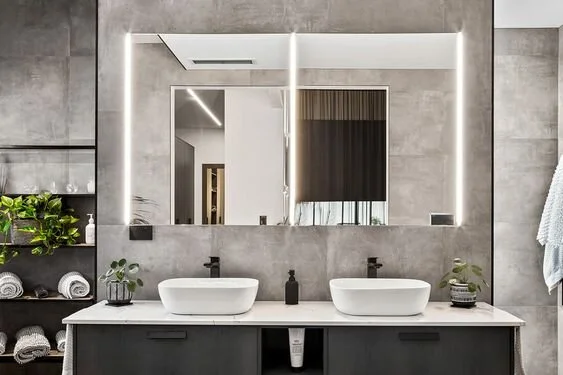
Wall lights either side (the ideal).
Forward-facing light from both sides is the principle behind the old Hollywood globes, and it still lights every detail of your face. With LED, you can build it into a custom mirror or use high-performance wall lights either side. The make-or-break detail is that the light has to come forward onto your face. Up/down wall lights throw their light along the wall and won't do the job.
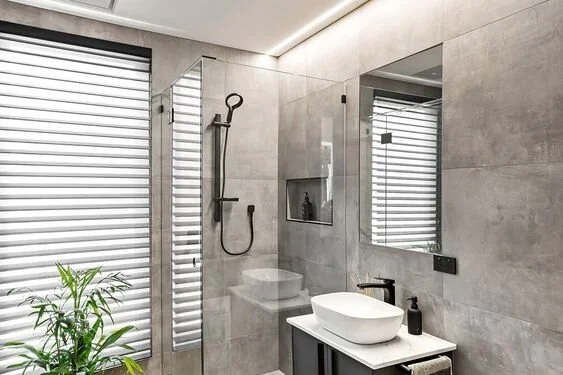
Linear LED in the ceiling (the streamlined).
Diffuse light in the ceiling, just off the mirror, keeps lovely clean lines and reflects off the mirror and walls onto your face. It works best in ceilings 2.7m and lower, and it needs a high-output, high-quality LED tape.
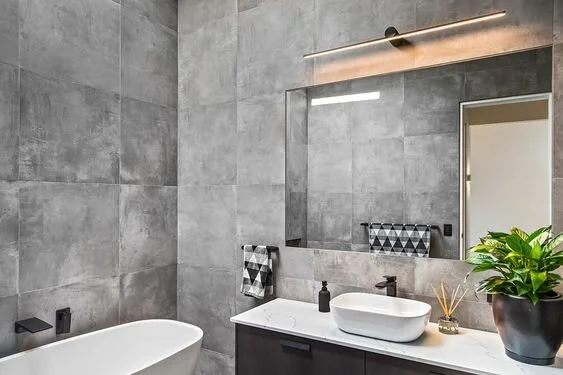
A bar light above the mirror (the minimalist).
Powerful, diffuse and slightly directional, it pushes light down between your face and the mirror, with just enough shadow to model your features and a bounce off the basin to fill in under your chin. It isn't everyone's aesthetic, and a surface-mounted cabinet can get in its way. Watch the lumen output, or you'll be disappointed.
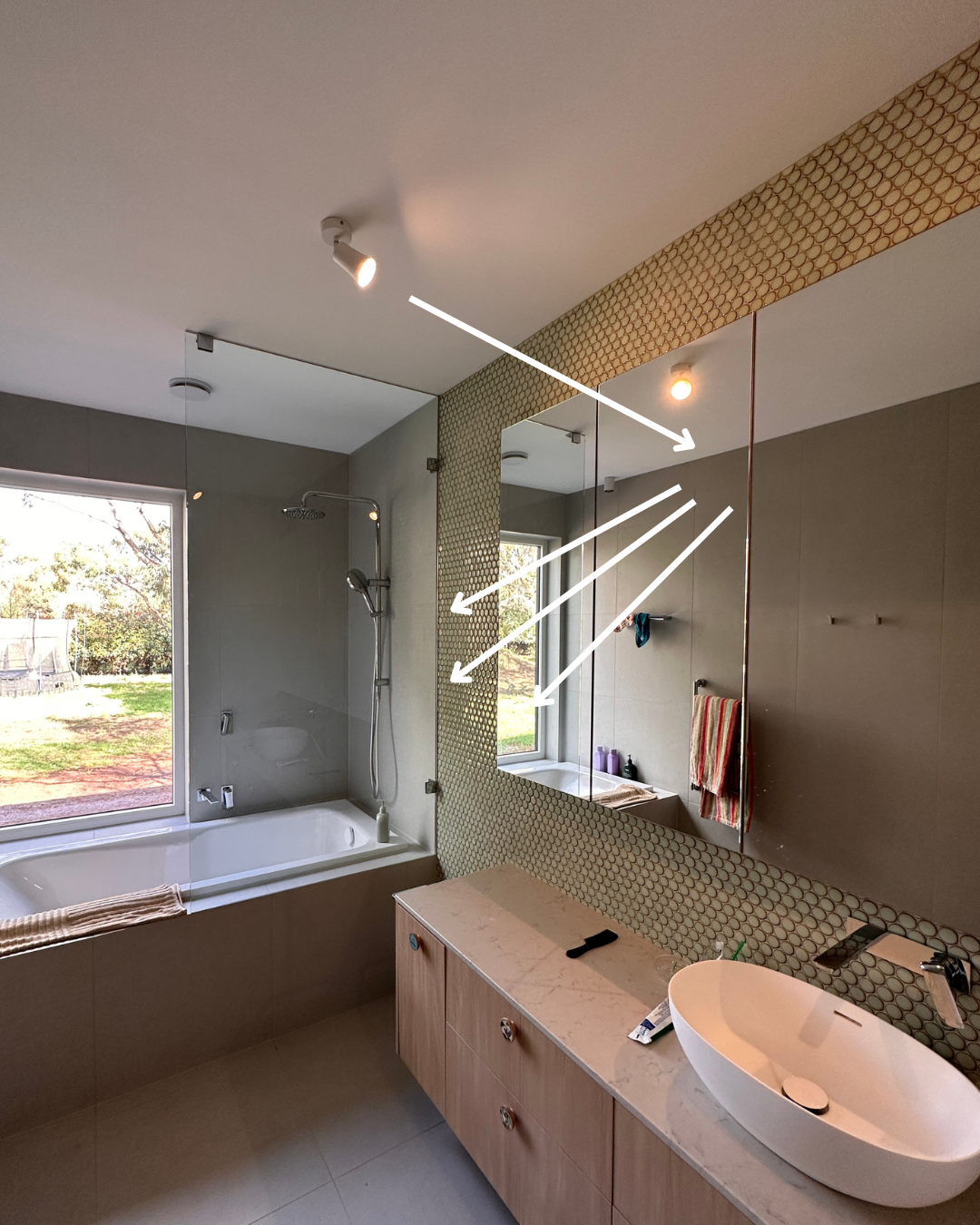
Adjustable spotlights in the ceiling (focused function).
Well-placed adjustable fittings aimed into the mirror reflect light back onto your face. Positioning is everything, because the offset from the mirror, the spacing, the tilt and the beam all depend on your ceiling and mirror height. Put these on their own switch and use them when you need them. And a gimbal is not an adjustable light. For bouncing light off a mirror, tilt is everything.

Light quality matters most at the mirror
Your skin is the most colour-critical surface in the house, which makes light quality non-negotiable here (mirror quality matters too, but we'll leave that to the interior designers). Look for:
CRI 90+ at the mirror, and CRI95+ if makeup is critical. Part Four explains why.
Warm white light: 3000K if you like it crisp, 2700K for a more luxurious warmth, and never mixed with cool white in the same room.
Glare control, because a light you can see in the mirror is a light shining in your eyes.
Enough lumens, because a pretty fitting with a low output will leave you squinting.
How to Compare Light Fittings covers what to check on a spec sheet.
Lighting one bathroom?
These are four of the ten methods in our Bathroom Lighting Design Made Easy guide, which has the mounting heights, offsets and lumens for each one, plus a matrix that matches each method to your mirror. Use code READBATHBLOGS for 10% off. Get the guide →
Building or renovating the whole house?
MINT designs lighting for whole homes across Australia and internationally, and your bathrooms are designed alongside every other room. We don't sell light fittings, which leaves us free to recommend whatever suits your home, from any brand. Explore our home lighting design services →
Mirror lighting is one of those details that looks small on a plan and turns out to be the thing you notice every single morning. Get the light between your face and the mirror, insist on quality, and you'll start each day seeing yourself clearly (and possibly liking what you see a little more).