
Your Lighting Designer Is Not Trying To Gaslight You About LEDs
Social media puts some interesting ideas in the spotlight, not all of them well founded or as dramatic as you might be led to believe. And with AI now one of the tools people are using to better understand their homes and the lighting in them, some of those popularised ideas gain traction they may not truthfully deserve.
Healthy light is a real hot button topic. It's been discussed in the lighting world for decades, but circadian rhythm lighting is now appearing everywhere. The solutions for "solving your lighting problems" are many, varied, and often complex and expensive.
There is, however, a very simple and inexpensive answer to the "my light is keeping me up at night" conundrum, but first, let me give you some foundational facts about LED lighting that will arm you with the knowledge you need to avoid the marketing traps of the internet.
More and more, we are working with people who don't just want beautiful layered light - they also want to know their lighting is supporting their health. Because there is so much information floating around, a lot of people are landing on the solution being a return to incandescent light.
As much as you may want that to be the answer, legislation means LED is our current and future light source. Halogen is being phased out of the Australian market, and while you can still source it for now, you are designing a home you will live in for the next 20 to 30 years. Building your lighting scheme around a lamp type that is disappearing from shelves is not a health strategy, it is a future maintenance headache. So rather than hating on LEDs, let's understand what people are actually talking about when they ask "is LED lighting bad for your health?" especially when the answer to that question online is most commonly followed by "so buy my product and you'll be saved."
There are real concerns about light and how we use it in our modern homes. We have access to light at any time of day, and without thinking we can over-expose ourselves to bright light late into the evening, resulting in sleep delay or poor sleep. Which I can absolutely relate to. Having a sleep ritual is the only thing that has saved my sanity and kept my eyes closed each night.
And a big part of that ritual is light control. It is not complex, or expensive. I am a designer, not a millionaire.
Research over the past two decades has documented that light affects us physiologically in ways we are only beginning to fully understand. The key issues people are typically reading about are:
LED flicker
Blue light from LEDs
Light causing disruption to our circadian rhythm
Let's address them in order.
LED FLICKER
Flicker can cause headaches, discomfort, eye strain, and for me personally a sick feeling in my body. Everyone is sensitive to flicker to different degrees, so what disturbs me may be utterly irrelevant to someone else. Lucky them.
Flicker in LEDs comes down to how they handle electricity, not just the fact that they use it. To manage electricity, all LEDs have drivers, even the little light globes. Drivers are necessary to convert the 240V (or 110V) electricity to the milliamp constant current electricity the LED chip needs to operate, and because an LED reacts to current changes almost instantly (unlike an old incandescent globe, which had enough thermal lag to coast through the wobbles), the quality of that conversion matters enormously.
A cheap LED will have a driver made with cheap electronic components, and they will often cause more visible flicker. More reputable LED brands use high quality drivers designed to manage electricity at frequencies that mitigate the impact of flicker on people. You can find brands that specifically use flicker-free drivers if you want to be absolutely sure.
Word of warning though, your LED light globes are more likely to flicker visibly than an LED light fitting with an integrated chip and high quality driver. And phase dimming LEDs is more likely to cause flicker than using 1-10V analog dimming or a digital dimming protocol like DALI.
LEDs are little pieces of electronic technology, so just like with all other electronic devices, you get what you pay for.
Look for flicker-free drivers, and avoid phase dimming OF SINGLE LIGHT GLOBES.
Blue light from LEDs
The biggest issue with blue light from LEDs is not buried deep in the spectrum, it is using high levels of cool white light in your home in the evening when you’re trying to wind down.
The bright, visibly blue quality of cool white light is closer to midday daylight, and sends "alert" signals to your body.
With incandescent lights, we didn't really have a choice of colour, it was warm white or dark.
So the availability of cool white light from LED has caused real issues for many people.
And there is another factor worth considering: with incandescent we were lucky to achieve more than 600 lumens in a bedroom, or 1000 lumens in a living room. Six LED downlights at 1000 lumens each gives you 6000 lumens - a dramatically higher light level than we could ever achieve before, quite apart from the colour temperature question.
One more thing worth knowing when you are choosing your LEDs: not all warm white globes are created equal. CRI (Colour Rendering Index) measures how accurately a light source renders colour, where 100 is a full spectrum of light (like sunlight or incandescent) and anything below 80 is considered poor.
For a home, aim for CRI 90 or above.
If your home has warm timbers, rich fabrics, artwork, or people with warm skin tones you would like to look like themselves under artificial light, push for CRI95+.
It is the difference between a room that looks considered and one that looks slightly off, even when you can't quite say why.
What colour temperature is best for home lighting?
3000K warm white if you want crisp, functional light without any blue in the room
2700K warm white if you like it a little warmer and cosier
Dim-to-warm, 1800K, or colour-adjustable smart lights if you want to really play the field and get toasty candlelight tones in the evening
Those warmer lights are particularly good late at night. You will be amazed how much you can see from a 100 lumen light once your eyes have adjusted.
For more information about how to CHOOSE the right light – head over to our blog “Evaluating light fittings to use at home” it explains all the technical elements of LED lights so you can make an informed choice.
Circadian rhythm disruption
This one is very popular in the wellness influencer world, but the real issue is not exposure to light itself, it is exposure to bright light in the hours before bed. All your downlights blazing away after dinner will measurably delay your melatonin, soft indirect lighting in the same room will not.
In plain terms, your body's internal signal to start winding down for sleep arrives roughly an hour and a half later than it would in a low light environment. That's the difference between feeling genuinely sleepy at 9:30pm versus still feeling wired and scrolling your phone at 11pm, wondering why you're not tired yet. One evening under bright light won't wreck you, the knock on effect is sleep debt, not a bad night, but string enough of those nights together under full downlights and you're chronically pushing your sleep window later than your body actually needs.
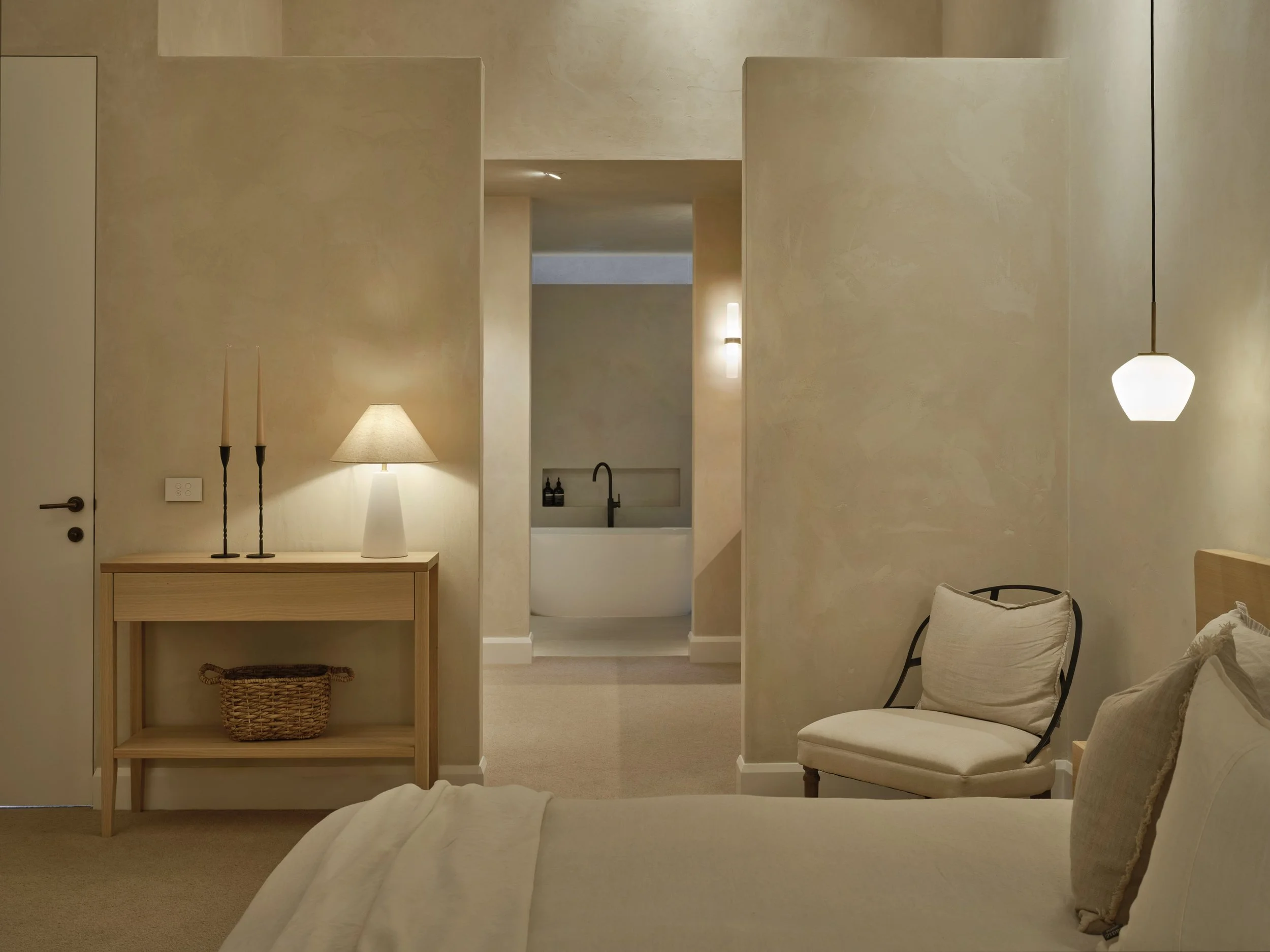
To mitigate this problem, you can invest in clever technology that allows you to change the colour and intensity of your light across the day and into the evening. LED gives you a lot of flexibility on this front. Or you can simply turn off all the main lights after dinner, and live in low level light (warm white, naturally) for the evening. You will soon find yourself feeling calmer before sleep and sleeping better, and you can achieve that with a simple table lamp. If you are looking for a specific light level, aim for 50 lux or less in the room you are in for the two to three hours before sleep. That is usually just one lamp.
And the single most important thing you can do for your circadian rhythm has nothing to do with your light fittings: get into sunlight as early as possible each day. Outside if you can, or in front of a sun-drenched window if you can't. The amount of light the sun delivers is the most natural way to tell everything in your body that the day has started and it is time to be up and about.
I was recently asked at a MINT Light 101 event, what do I do about sunlight at the end of the day? West-facing windows meant this person had a lot of sunlight in their home, and in summer it can be as late as 10pm before the light levels drop. My answer? Not to be cheeky - but good quality blinds or curtains. You have to block the sun if you want to control your evening light exposure.
That sleep ritual I mentioned earlier? It doesn't matter what is happening outside. At 7pm every night we pull the blinds and take control of how much light we are sitting in. At 8pm it drops to two table lamps in the living room and night lights in the bathroom. At 9pm it drops to one lamp. I am very conscious of the privilege in my life that allows for a restful evening, and I am acutely aware that for a lot of people that simply isn't possible. But you can take the principle and apply it to your own life by turning off the main lights as early as possible, and using a lamp for evening lighting.
A few things worth trying:
Use just enough light for the task at hand, and light the task rather than the whole room.
Avoid highly stimulating activities before bed.
When you're brushing your teeth, do it in as little light as possible - the less light you see right before bed, the better your chances of dropping off quickly.
Did you notice that the inexpensive simple answer is simply to turn off, or dim down, your existing lights? No new products needed, unless your lights are all cool white, in which case switching the late-night lamp in the corner to a warm white globe is an inexpensive fix and a very good place to start.
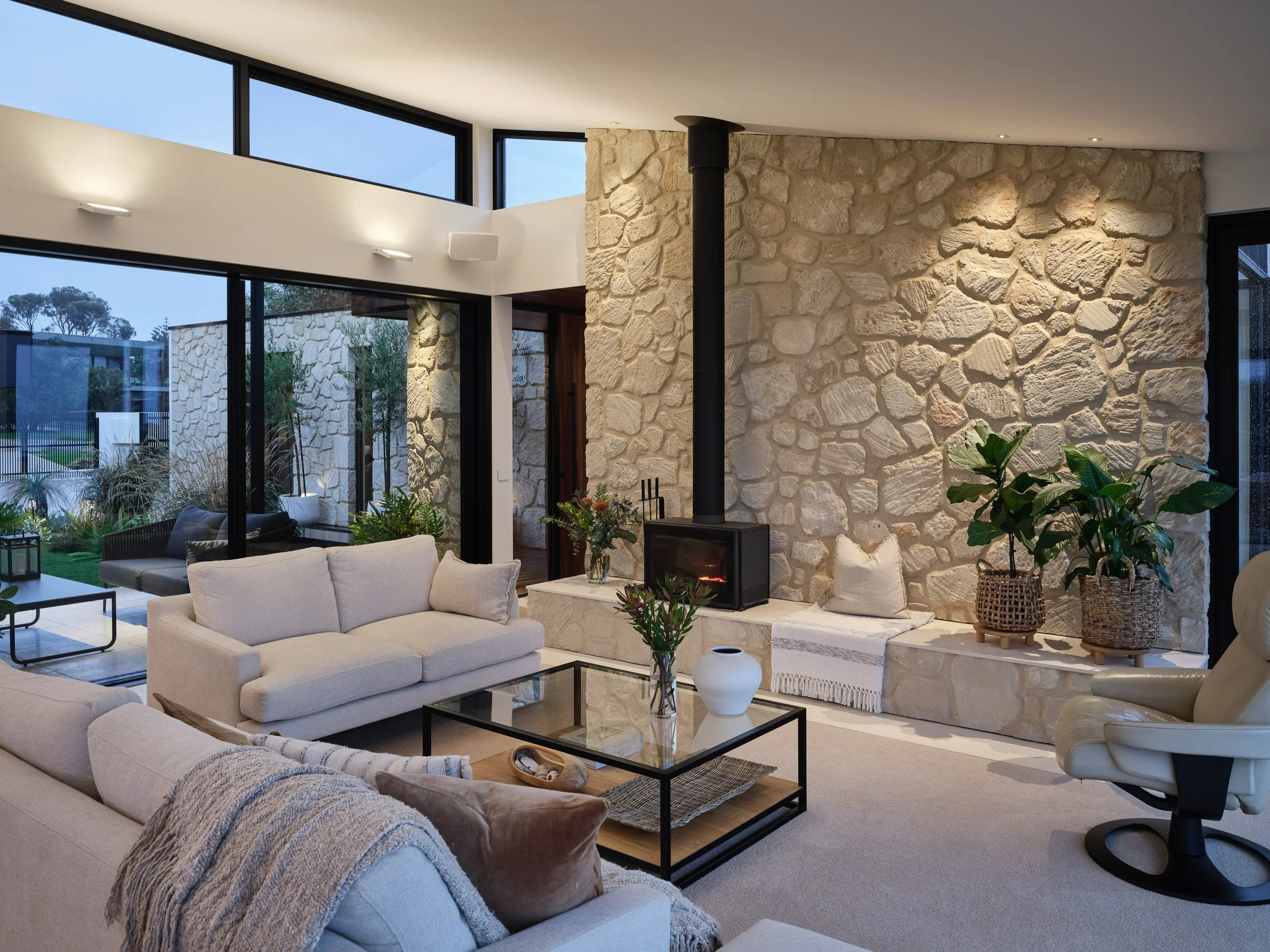
How to reduce blue light at home, and everything else you actually needed to know
The instinct that brought you here is a good one. Light matters. More than most people realise until they start pulling on the thread. It affects how you feel, how you sleep, and how your home functions around the moments of your day.
The good news is that you can improve your situation tonight for almost no money, just by changing how you use the lights you already have.
If you want to go further, to design light that flows with your day, that gives you function where you need it and warmth and calm when you want it, that is where it gets interesting. And that is where we play at MINT.
We are a team obsessed with light. We have designed over 1300 homes across Australia, New Zealand, the USA, the UK, and a few places in between. If you want advice that is not tangled up in selling you product, but is guided by you and what you actually need from the light in your home, we'd love to hear from you.